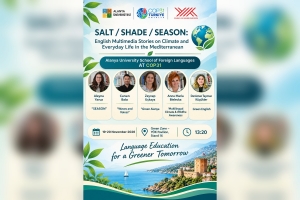
Alanya University School of Foreign Languages is taking part in COP31 with five projects at the Green Pavilion in Antalya on November 19–20, 2026, bringing its academic work on language educatio...
SCHOOL OF FOREIGN LANGUAGES QUALITY POLICY
As the School of Foreign Languages at Alanya University, our quality policy is based on the following fundamental principles:
- Student-Centred Education: Providing an educational environment that takes into account students' language learning needs, expectations, and individual differences.
- Continuous Improvement: Regularly monitoring and evaluating educational activities and improving them in line with the results obtained.
- Compliance with International Standards: Adopting national and international quality standards in foreign language education and supporting institutional development in line with the EAQUALS accreditation process.
- Effectiveness and Efficiency in Education: Developing teaching methods, materials, and educational technologies in accordance with contemporary approaches to language teaching.
- Reliability in Assessment and Evaluation: Assessing students' language skills through valid, reliable, transparent, and consistent assessment and evaluation methods.
- Academic and Professional Development: Continuously supporting the professional competencies and academic development of academic staff.
- Stakeholder Engagement: Incorporating the views and suggestions of students, academic and administrative staff, and other stakeholders into quality processes.
- Transparency and Accountability: Adopting the principles of openness, accessibility, and accountability in educational and administrative processes.
- Student Satisfaction: Creating an inclusive and accessible learning environment that supports students' academic and social development.
- Institutional Sustainability: Embracing a sustainable development approach by integrating a culture of quality into all activities of the School.
In line with these principles, the School of Foreign Languages is committed to enhancing the quality of education, strengthening alignment with international standards, and making the understanding of continuous development an integral part of its institutional culture.
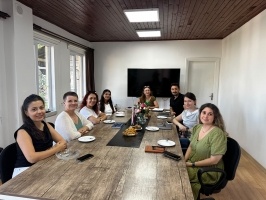
The opening meeting of the School of Foreign Languages for the 2026–2027 Academic Year was held to discuss preparations for the new academic year. The meeting addressed academic planning, teachi...
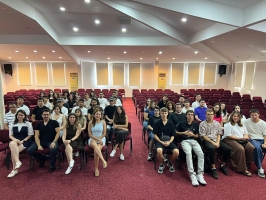
Orientation Meeting Held with Students of the 2026–2027 Academic Year English Preparatory Program.
There are no event available.
See All